
The Wado Ryu Way
A disciplined path of training
Unlike styles that rely only on hard blocking and direct force, Wado Ryu places great emphasis on body movement, timing, evasion, redirection, and efficient technique. It carries the influence of both Okinawan karate and Japanese budo, making it a deeply refined martial art with a strong connection to discipline, character, and tradition.
The United States Eastern Wado-Ryu Karate Federation is committed to preserving and passing forward this art with respect for its history, principles, and continuing lineage.
Wado Ryu is more than a system of strikes, blocks, kicks, and kata. It is a disciplined path of training that seeks to develop the whole person.
Through consistent practice, students learn:
- Proper technique and body mechanics
- Discipline, respect, and self-control
- Awareness, timing, and distance
- Confidence through structured training
- The importance of humility and perseverance
- Harmony between mind, body, and spirit
The pages in this section are offered as a guide for students, instructors, families, and visitors who wish to better understand the foundations of Wado Ryu Karate-Do.
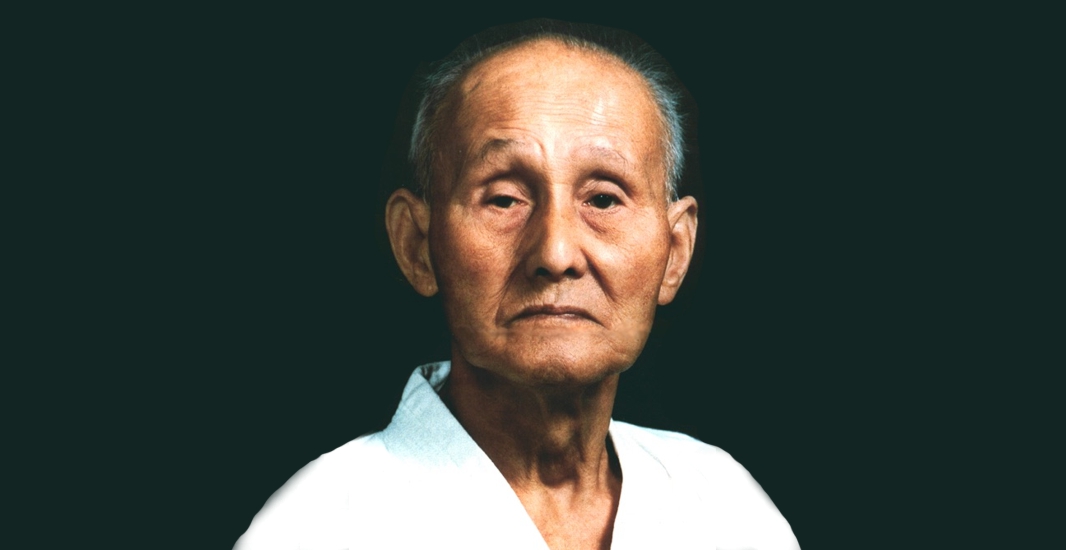
An Open Letter from Hironori Otsuka I
to all Wado-Ryu students about 2 years before his death
At the age of five years old, I was in very poor health. It was then that I began my training in Jujitsu at the school of my uncle, Sensei Chojiro Ehashi, the official martial arts instructor of the Tsuchiura Clan. Since this time I have trained continuously until my present age of 88 years. For this, I can heartily thank the traditional Samurai education which was both gentle and strict. I also thank and pray for my dear mother without whom I could never have succeeded in my deepest aims, I thank her sincerely for always being near.
On my thirtieth birthday, Master Nakayama, the third Grandmaster of Shinto Yoshin-Ryu Jujitsu, allowed me to learn the deepest and most secret doctrines of our school. It was then that I succeeded him as the fourth Grandmaster.
Karate was becoming increasingly popular around this time, and I began to study it's techniques from several eminent Okinawan masters who had begun to teach in Tokyo. It occurred tome that there were many fine attributes in the Okinawan systems, and so decided to blend these with the finest elements of Shinto Yoshi-ryu Jujitsu and Aikido to create a genuine and original Japanese martial-art. Through this process I developed KUMITE, GYAKUNAGE, IDORI, TACHIAI, TANKEN-DORI, AND SHINKEN-SHIRAI-DORI.
Every year, for purposes of promoting the Japanese martial-arts, the Butokuden in Kyoto held a national festival. In 1938, the festival focused on the originators of each martial-art, however, no originator of Japanese Karate had been identified. I named the originator of the first true Japanese style of Karate-Do as Shiro-Yoshitoki Akiyama (the founder of Shinto Yoshin-Ryu Jujitsu) and named this new style of Karate-Do, 'Wado-Ryu' meaning: 'Japanese-way school' or also 'Peaceful-way school' since the Kangi lettering for 'Wa' can mean both.
The fundamental meaning and original aims of martial-arts is the promotion of Peace. To bring peace to society and to guard against it's loss so that human beings can enjoy a happy life. We must strive for peace in a world where it is increasingly difficult to achieve. We must not simply rely on God's mercy to achieve it but must strive as individuals, with all our will, to attain it. Immense spiritual and physical power is required so we will not surrender to the difficulties and barriers which lie before us on this journey The hard training in martial-arts aims to foster this dauntless, indefatigable strength which is why the beauty of martial-arts training is beyond the vicissitudes of mundane affairs."
In 1972, Hironori Ohtsuka I was awarded the rank of 10th Dan by the Kokusai Budo-in (International Martial-arts Federation) making him the first officially recognized 10th Dan master of Karate-Do in Japan, the same status enjoyed by Kyuzo Mifune of Judo and Hakuko Nakayama of Kendo.
Before his death at the age of ninety in 1982, he abdicated his position as Grandmaster and nominated Jiro Ohtsuka, his eldest son, as the second Grandmaster Hironori Ohtsuka II.